


The tool is essential, but it is not the only factor
When a machining operation presents issues related to instability, surface quality, or non-competitive cycle times, the first intervention often involves the tool itself. This is a natural choice, as tooling directly affects precision, production continuity, and machining performance.
However, in more complex machining operations, the final result depends on the balance of the entire production process. Conservative machining parameters, poor chip management, inadequate workholding systems, or inefficient operational sequences can limit machining performance, even when technically advanced tools are used.
In these situations, focusing exclusively on the single component often leads only to partial or temporary improvements.
The production process as an integrated system
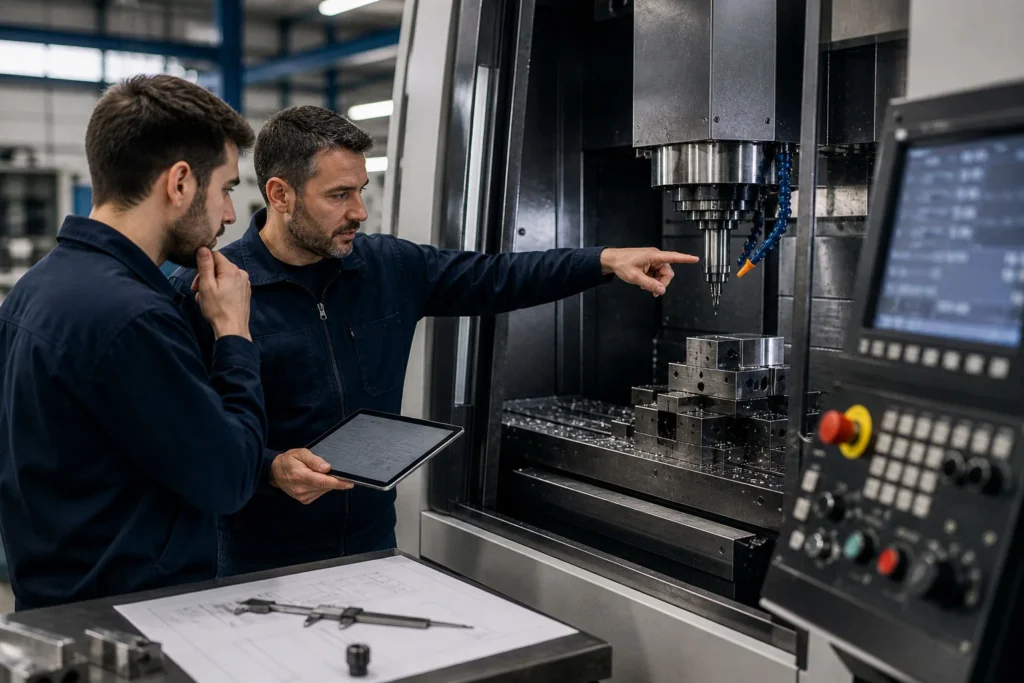
Achieving truly stable and efficient results requires analyzing the process as a whole. Every element of the machining operation — tooling, machining parameters, workholding systems, and operational management — contributes to the overall behavior of the production cycle.
A process-oriented approach makes it possible to identify issues that are not immediately visible and to develop solutions that are more reliable, repeatable, and controllable over time. In this context, the tool maintains a central role, but as part of a system designed to work consistently and efficiently.
A high-performance tool can fully express its potential only when the process itself is correctly optimized.
For this reason, IG Utensili supports manufacturing companies in developing dedicated solutions for high-precision machining operations, integrating tooling, technical expertise, and analysis of real production conditions.
Discover our approach to complete solutions: https://igutensili.it/en/full-pack/